Lower emissions

start on the ground.

Aviation’s environmental footprint doesn’t begin and end in the air. Aircraft idling, ground equipment, taxi time, and the infrastructure built around every gate all carry a carbon cost.

NEXUS enables more fuel and carbon efficient ground operations while reducing the need for carbon-intensive terminal expansion.

Lower emissions

start on the ground.

Aviation’s environmental footprint doesn’t begin and end in the air. Aircraft idling, ground equipment, taxi time, and the infrastructure built around every gate all carry a carbon cost. NEXUS enables more fuel and carbon efficient ground operations.

Lower emissions

start on the ground.

Aviation’s environmental footprint doesn’t begin and end in the air. Aircraft idling, ground equipment, taxi time, and the infrastructure built around every gate all carry a carbon cost.

NEXUS enables more fuel and carbon efficient ground operations while reducing the need for carbon-intensive terminal expansion.

Carbon emissions prevented at the source,
not offset.

Carbon emissions prevented at the source, not offset.

Electric by design

Zero-emission, fly-by-wire vehicles support carriers' net-zero commitments.

Less build

NEXUS adds capacity with less terminal construction, avoiding years of building and the embodied carbon that comes with it.

Open-apron flow

Remote and open stands give airports another way to move aircraft without feeding every flight through congested gate alleys.

Less ground equipment

One electric platform replaces work traditionally spread across passenger buses, pushback equipment, and other ground-support movements, reducing ramp traffic and sources of local emissions.

Less engine-on time

Self-dispatch removes the pushback-tug sequence and long taxi holds for fewer minutes of main-engine running per movement.

Electric by design

Zero-emission, fly-by-wire vehicles support carriers' net-zero commitments.

Less ground equipment

One electric platform replaces work traditionally spread across passenger buses, pushback equipment, and other ground-support movements, reducing ramp traffic and sources of local emissions.

Less build

NEXUS adds capacity with less terminal construction, avoiding years of building and the embodied carbon that comes with it.

Less engine-on time

Self-dispatch removes the pushback-tug sequence and long taxi holds for fewer minutes of main-engine running per movement.

Open-apron flow

Remote and open stands give airports another way to move aircraft without feeding every flight through congested gate alleys.

Right-size the building.

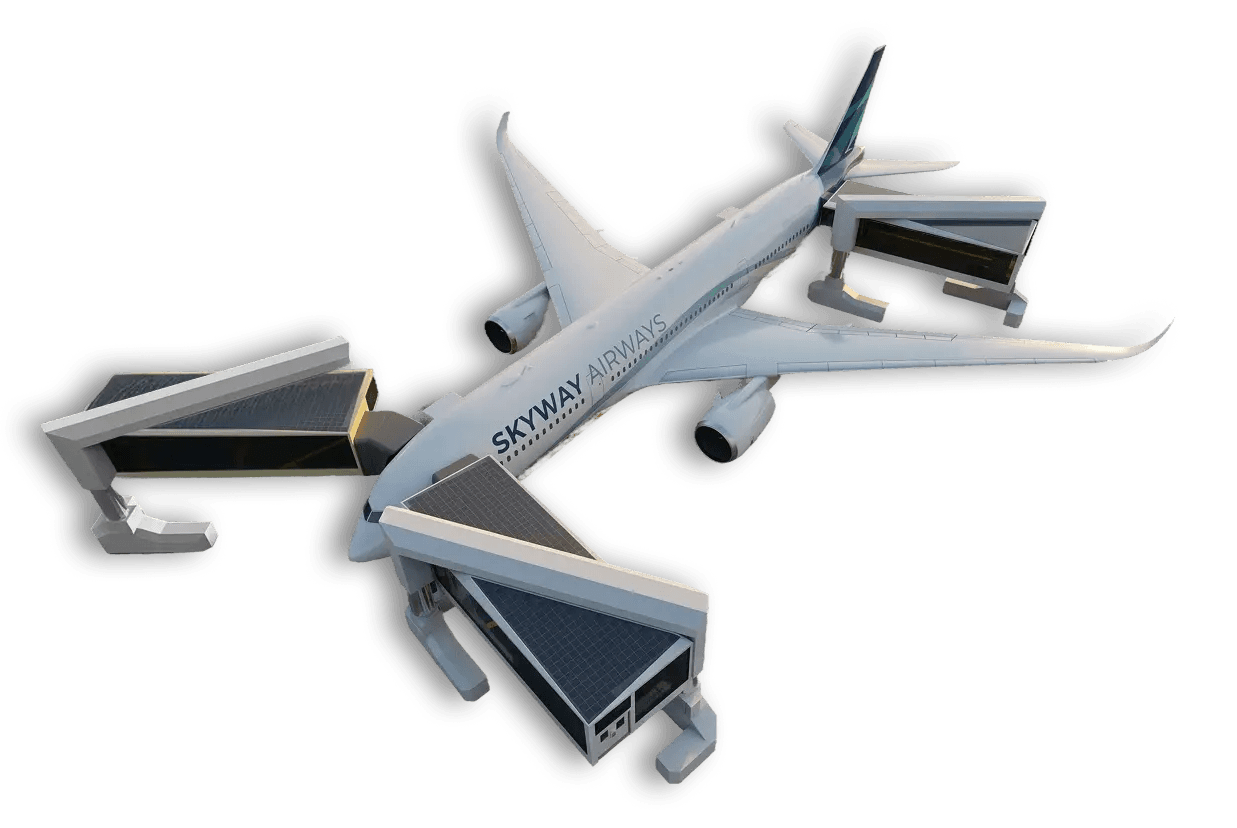
By bringing the gate to the aircraft, NEXUS opens up new possibilities for terminal design, reducing the space, materials, and energy needed to serve passengers:

  • Entirely new terminal form factors become possible — less built area, shorter walking distances

  • Fewer waiting areas and walkways, and higher gate density through avoidance of the wingtip separation traditional gate layouts require

  • NEXUS itself can serve as flexible post-check-in waiting space where needed

  • Less energy spent on HVAC, lighting, cleaning, and maintenance across a smaller building envelope

A new, sustainable way to grow.

More passengers have traditionally meant more gates, more ground equipment, more terminal infrastructure, and more energy demand. NEXUS changes that relationship, giving airports another way to grow while reducing the physical and operational footprint that growth typically leaves behind.

Explore more NEXUS benefits.

© 2022-2026 EERO Group, Inc.

© 2022-2026 EERO Group, Inc.

© 2022-2026 EERO Group, Inc.